Sewer Line Repair Upland CA
Foothill Knolls sewer line repair

Sewer Line Repair in Foothill Knolls, Upland, CA

Foothill Knolls is one of Upland’s established residential pockets, where mid-century homes sit beneath a mature tree canopy within sight of the foothills. Many houses here still depend on their original vitrified clay laterals — and sixty years of root growth have made those joints the neighborhood’s most common sewer problem. We put a camera in the line before recommending anything, then clear, repair, or replace with the least digging the lot allows.

San Bernardino County
Local service area
Safety-first
Code-aware sewer work
Root-intrusion experts
Mature trees are our specialty

About this area

Why sewer line repair in Foothill Knolls matters

Why we serve here

Foothill Knolls is the kind of neighborhood where the trees tell you the pipe’s age. Built out mainly from the 1950s through the 1970s, its streets are lined with mature sycamores, oaks, and pines shading classic California ranch homes on generous lots. The houses have been updated many times over — but the sewer laterals underneath are often original: vitrified clay pipe with a joint every three feet, each joint a welcome mat for roots.

Mid-century homes, mature trees, and clay laterals meeting sixty years of roots

The housing stock is the story. Post-war ranch homes with low profiles and deep setbacks, many with cast-iron drain pipe under the slab transitioning to clay in the yard. Clay was the standard of its era — durable against corrosion, but every hub joint is a slight gap in an otherwise solid line. Six decades of seasonal growth have sent tree roots into those gaps with relentless patience.

Then there are the trees. Foothill Knolls’ canopy is its defining feature and its sewer system’s greatest test. A mature tree’s root zone extends well beyond its drip line, and roots seek moisture with precision — the constant damp around a clay lateral’s joints is irresistible. Root intrusion here isn’t a freak event; it’s the expected lifecycle of a clay lateral under mature trees.

Clay joints fail in a characteristic sequence: fine roots enter at a joint, the root mass grows and pries the joint wider, paper and solids catch on the intrusion, and the line that drained fine for years starts clogging on a schedule. Hydro jetting cuts the roots back and restores flow — but the joint stays open, so the cycle repeats until the pipe is repaired or replaced.

Access shapes every Foothill Knolls job. Mid-century homes often lack a cleanout at the property line, and the original cleanouts — if they exist — may be buried under decades of landscaping. We frequently start by locating the lateral and establishing access, sometimes installing a two-way cleanout that makes every future inspection and cleaning dramatically simpler.

Remodels add the final layer. Kitchens expanded, bathrooms added, garage conversions — each ties more flow into a clay lateral designed for a smaller household. An older line that handled the original three-bedroom ranch can struggle with the added load, and the camera often shows the new bathroom’s tie-in sitting right where the roots are thickest.
Services available

Sewer line repair services in Foothill Knolls

In Foothill Knolls, sewer work has to answer to mature tree roots, aging clay joints, and mid-century laterals that have never been seen on camera. Our repair, root removal, and trenchless services are built for exactly that: camera diagnosis first, then the smallest effective fix — from hydro jetting a root-choked joint to bursting a clay lateral that roots have claimed for good.

How we work locally

How sewer line repair is executed in Foothill Knolls

Challenge: Heavy root intrusion in vitrified clay laterals

Foothill Knolls’ mature canopy and original clay laterals are a perfect storm: every three-foot joint is a potential entry point, and sixty years of growth have found most of them. Root masses can fill the pipe’s full diameter, catching everything the house sends down and turning a working lateral into a recurring emergency.

Solution: We camera-map every intrusion, then clear the line with mechanical cutters and hydro jetting to restore full bore. That buys honest information: the after-footage shows whether the pipe is sound enough to maintain with periodic cleaning or whether the joints are too far gone. For lines where roots return within months, pipe bursting replaces the clay with jointless HDPE that roots can’t penetrate.

Challenge: Aging clay-to-cast-iron transitions under mid-century homes

Many Foothill Knolls homes have cast-iron drain pipe under the slab that transitions to clay in the yard — and that transition is a weak point twice over. Cast iron corrodes from the inside, narrowing with scale and tuberculation, while the clay side invites roots at every joint. The handoff between the two materials often settles differentially, creating an offset right where flow is already restricted.

Solution: The camera shows us both materials in one run: scale and corrosion inside the iron, root masses at the clay joints, and the offset at the transition. Light scale gets hydro jetted; heavily corroded iron and root-destroyed clay get replaced — often by bursting the yard lateral and addressing the under-slab section, matched to what the footage shows.

Where we work

Foothill BoulevardMountain AvenueSan Antonio AvenueEuclid Avenue19th Street16th Street

Where we work

Foothill Knolls

Latitude: 34.0975

Longitude: -117.6484

Extract Directions

Case files

Illustrative examples of the kind of sewer line work Foothill Knolls’ mature trees, clay laterals, and mid-century homes typically call for. Every property is different — these sketches show how the diagnosis usually unfolds, not a promise of any particular outcome.

Illustrative scenario: 1

Mid-century ranch — clay lateral choked with roots

Challenge

A ranch homeowner dealt with toilets bubbling whenever the washing machine drained — the signature of a lateral so full of roots that fixtures were fighting for air. Previous cleanings had helped for a few months at a time, each one buying a little less relief than the last.

Execution

The camera found root masses at nearly every clay joint along a sixty-foot run, with two joints pried visibly open. We cut the roots mechanically, followed with hydro jetting to scour the pipe walls, and recorded clean after-footage showing the clay itself still structurally sound. With the joints open but the pipe intact, we set the line on a periodic maintenance schedule and installed a two-way cleanout for fast future access.

Impact

Flow was fully restored, the after-footage gave the homeowner a clear picture of the line’s true condition, and the new cleanout means future maintenance takes an hour instead of a day.

Illustrative scenario: 2

Post-war home — offset joints replaced by pipe bursting

Challenge

Another Foothill Knolls home had the opposite problem: the camera showed clay joints not just rooted but offset — sections of pipe shifted out of alignment by soil movement, creating lips that caught solids and gaps that admitted soil. Cleaning could clear the debris but couldn’t fix the geometry.

Execution

With multiple offset joints across a long run, spot repairs would have meant excavating half the yard. Instead we used pipe bursting: small entry and exit pits, a bursting head that fragmented the old clay, and a new fused HDPE line pulled through the same path in one continuous, jointless run. The mature trees overhead never lost a major root.

Impact

The new line has no joints for roots to find, the yard needed only two small restorations, and the homeowner finally stopped scheduling annual root cuttings.

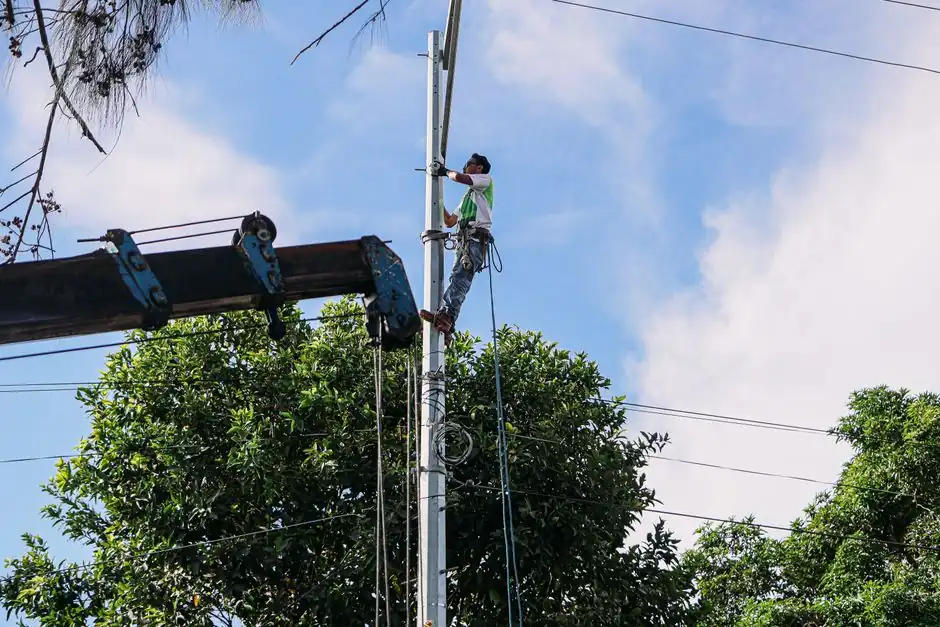
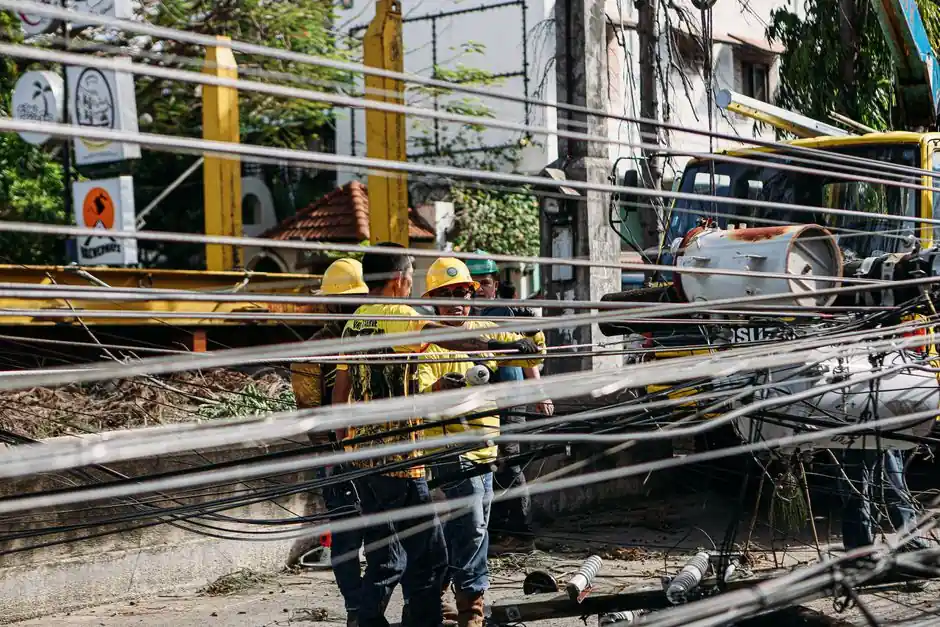
Utility workers servicing rural infrastructure serving Foothill Knolls, Upland, California.
Our track record
Our track record

Field evidence from Foothill Knolls

Sewer work shaped by mature trees and aging clay

Our work in Foothill Knolls keeps returning to the same fundamentals: camera first, respect the roots, and match the fix to the clay’s actual condition. Old clay fails at its joints — that’s where roots enter, where offsets open, where infiltration seeps in — so the diagnosis has to be visual and specific. We plan every job around the tree canopy, the pipe’s material, and what the footage actually shows.

Code-aware
Every repair planned around root zones and current code

Local questions

Why does Foothill Knolls have so many root intrusion problems?

It’s the combination of pipe and planting. Most Foothill Knolls laterals are vitrified clay with a hub joint every three feet — and after sixty years, those joints are the path of least resistance for any nearby root. The neighborhood’s mature trees have had decades to find them, and a tree root can detect the moisture around a sewer joint from well beyond the drip line. Once a fine root enters, it grows into a mass that pries the joint wider, which admits more roots. It’s a cycle, not a coincidence — and it’s why root problems here are a when, not an if.

How do I know if my clay lateral needs repair or full replacement?

The camera makes the call. Isolated root intrusions at a few joints with sound pipe between them usually mean targeted repair or a maintenance plan: clear the roots, fix the worst joints, monitor the rest. But when the footage shows offsets at multiple joints, cracks running through pipe sections, or root masses returning within months of a thorough cleaning, the line is telling you its service life is over. Replacement — usually by pipe bursting — costs more once but ends the cycle of recurring cleanings and emergency backups.

Will trenchless repair work on old clay pipe?

Very often — clay is actually a good candidate for pipe bursting, because the brittle pipe fragments cleanly as the bursting head passes and the new HDPE line follows the same path. It works best when the old line’s alignment is roughly intact; severe collapses or extreme offsets can complicate the pull. That’s a judgment call made from camera footage, not from the pipe’s age. Sectional lining can also rehabilitate isolated bad joints from inside the line without disturbing the yard.

What affects the cost of sewer line work in Foothill Knolls?

The main local factors are the lateral’s length and depth, how many joints are affected and how badly, access for equipment around mature trees and landscaping, and whether the pipe’s condition allows trenchless replacement or needs open excavation. Adding or exposing a cleanout, working around large roots that must be preserved, and restoring established planting beds all factor in. We quote from camera footage and a site walk, so the price reflects your property’s actual conditions rather than a generic per-foot guess.

Safety & code compliance

Trust and compliance

Sewer work in Foothill Knolls has to satisfy the same plumbing codes as anywhere else in California — plus the practical demands of mature tree root zones, fragile old clay, and mid-century homes with limited cleanout access. We approach every job with current code requirements in mind, document our work clearly, and make sure you understand what was done and why. Camera footage before recommendations, permits where the work requires them, and no pressure tactics — just careful, explainable work.

Root-aware work Planned around mature trees and clay pipe
Camera inspections included Work documented to local requirements
Trenchless-first repairs Digging only when trenchless won’t do
When To Call

Signs you need sewer line repair in Foothill Knolls

In Foothill Knolls, sewer trouble announces itself through the fixtures — because when a clay lateral fills with roots, the whole house feels it at once. These are the signs that point to the lateral rather than a simple clog.

1. Toilets and tubs backing up together

When multiple fixtures back up at the same time — toilets bubbling, tubs filling — the blockage is in the shared lateral downstream, not in any single drain. On old clay lines this is the classic root-mass signature: the pipe is still passing some water, but not enough for the whole house at once. Don’t wait for it to become a full stoppage.

2. Gurgling drains when the washer runs

A washing machine discharges a large volume fast, and if the lateral is narrowed by roots, the air ahead of that water has nowhere to go but back up through nearby traps. Toilets that gurgle or bubble during the wash cycle are reporting a downstream restriction — usually root intrusion at the clay joints — long before water starts rising.

3. Slow drains in every bathroom

One slow drain is a branch problem; every drain slowing together is a lateral problem. As root masses grow at the joints, the pipe’s effective diameter shrinks and the whole house drains a little worse each month. If plungers and store-bought cleaners used to work and now they don’t, the restriction has moved beyond their reach.

4. Sewage odor in the yard or near the cleanout

A healthy sewer lateral is airtight. When you smell sewage near a cleanout, along the lateral’s path, or in a low spot in the yard, wastewater gases are escaping through joints that roots have pried open or cracks the roots widened. The odor is the symptom; the open joints are the disease — and both deserve a camera, not air freshener.

5. A suspiciously green strip over the lateral

Roots don’t just enter the pipe — they thrive on what leaks out. A line of unusually lush grass tracing the lateral’s path marks joints that are weeping nutrient-rich moisture into the soil. It often appears before the first backup, which makes it one of the most useful early warnings a Foothill Knolls yard can give you.

6. Recurring clogs that keep coming back

A clog that returns to the same fixture every few months isn’t bad luck — it’s a condition. Roots cut back by a cable grow back thicker; the joint they entered stays open. If your lateral needs clearing on a schedule, the camera will show you why, and the footage usually makes the repair-or-replace decision obvious.

Local Problem Patterns

Common sewer line repair problems in Foothill Knolls

Foothill Knolls’ combination of mature trees, vitrified clay laterals, and mid-century construction produces a recognizable set of sewer line issues. Here are the patterns we see most often — and how each one gets resolved.

Root intrusion at clay joints

Why it happens here

Every clay lateral is a series of three-foot pipe segments joined at hubs, and every hub is a slight discontinuity roots can exploit. In Foothill Knolls, mature trees have had sixty years to send fine roots into those joints; once inside, the roots grow into masses that catch paper and solids. The pipe between joints is often perfectly sound — it’s the joints that fail, one root mass at a time.

Our approach

Camera first: we map each intrusion and grade its severity. Mechanical cutting plus hydro jetting clears the masses and restores full diameter, and the after-footage tells the real story. Lines with a few intruded joints get spot repairs or a maintenance schedule; lines rooted at every joint are honest candidates for pipe bursting — a jointless replacement roots can’t re-enter.

Offset and separated clay joints

Why it happens here

Clay segments are heavy and their joints are rigid — when the soil moves, the pipe doesn’t flex, it shifts. Differential settlement, nearby digging, or decades of wet-dry cycling can slide one segment out of alignment with the next, creating a lip inside the pipe and a gap outside it. The lip catches solids; the gap admits soil and roots.

Our approach

The camera measures each offset and shows whether the segments are still structurally sound. Minor offsets with sound pipe can be cleared and monitored. Offsets that catch solids or admit soil get repaired — sectional fixes for isolated cases, pipe bursting for runs where offsets repeat joint after joint.

Cast-iron scale and corrosion under the home

Why it happens here

The cast iron under a mid-century slab has been carrying wastewater for sixty-plus years, and iron corrodes from the inside out. Scale and tuberculation narrow the bore, roughen the walls so solids cling, and eventually pinhole through the pipe wall. Because it’s under the slab, the damage stays invisible until drains slow or a leak shows up as a warm spot or odor.

Our approach

Camera inspection through an accessible cleanout shows the iron’s interior condition directly — we can see scale buildup, channeling, and corrosion. Light scale responds to hydro jetting; heavily corroded sections need replacement. We match the fix to the footage: sometimes a sectional repair at the transition, sometimes a fuller replacement planned around the slab.

Missing or buried cleanouts

Why it happens here

Many Foothill Knolls homes were built before two-way cleanouts at the property line were standard, and original cleanouts have spent decades disappearing under landscaping, patios, and grade changes. Without access, every diagnosis starts with excavation and every cleaning takes twice as long — the line can’t be maintained because it can’t be reached.

Our approach

We locate the lateral, establish a proper access point, and install a two-way cleanout where the line meets the city’s portion — bringing the home up to modern access standards in a single visit. It’s the least glamorous upgrade in sewer work and one of the most valuable: future inspections take minutes, cleanings are straightforward, and emergencies get diagnosed before they get expensive.

Year-Round Coverage

How seasons affect sewer line repair in Foothill Knolls

The Inland Empire weather swings from spring downpours to summer heat to winter storm cycles, and each season presses on Foothill Knolls sewer systems in its own way. Here’s how the year typically unfolds for clay laterals under mature trees.

Spring

Spring is root season. Warm soil and spring rains send tree roots growing aggressively, and the year’s finest new root hairs probe every clay joint for moisture. It’s also when winter’s soil movement finishes shifting segments — spring camera inspections often catch new offsets and fresh intrusions at their most treatable stage.

Tip

After spring’s first big growth push, note any drains that slowed over winter — that’s the footage worth getting before summer’s heavy water use.

Summer

Summer loads the system. Irrigation keeps the soil — and the roots — active for months, while household water use peaks with guests, laundry, and long showers. A lateral that was marginal in spring gets no rest in summer; this is when partial root blockages become full ones, usually at the worst moment.

Tip

If summer brings the first gurgle from a toilet during laundry day, don’t wait for the backup — that’s the lateral asking for a camera.

Fall

Fall is Foothill Knolls’ maintenance window: the year’s root growth is visible on camera, the soil is workable, and there’s time to act before winter storms. Hydro jetting, root removal, and trenchless replacements all schedule more sanely now than as a holiday emergency — and the footage guides exactly how much work the line needs.

Tip

Schedule root maintenance or a camera inspection in the fall, when the year’s growth is done and winter’s rains haven’t yet tested every joint.

Winter

Winter storms test every weakness. Heavy rain drives groundwater into open clay joints — infiltration that steals pipe capacity — while saturated soil shifts segments and storms drop the leaves and debris that find their way into compromised lines. Neglected root masses become December backups with depressing regularity.

Tip

Before the storm season, make sure you know where your cleanout is and that its cap is accessible — if the line ever needs emergency access, that cap is where it starts.

Hiring Smart

Questions to ask before hiring sewer line repair in Foothill Knolls

Foothill Knolls’ mature trees, old clay, and limited cleanout access make the choice of contractor matter more than usual. These questions separate a crew that understands legacy sewer systems from one that just owns a cable machine.

  1. 1

    “Will you camera-inspect the line before quoting any work?”

    Why it matters

    On old clay, quoting without footage is guessing. You want a contractor whose first step is always the camera — recorded video you can watch, with distances marked so every intrusion, offset, and crack has a location. If the answer is ‘we’ll run a cable and see,’ you’re talking to a drain cleaner, not a sewer contractor.

  2. 2

    “How do you remove roots without destroying old clay pipe?”

    Why it matters

    Aggressive cutting can damage fragile clay, so method matters: the right cutter head for the pipe’s condition, hydro jetting to scour without impact, and a camera check after the work to confirm the pipe survived the cleaning. A good contractor talks about matching the tool to the pipe — not just about how fast the roots come out.

  3. 3

    “When is pipe bursting better than digging up the yard?”

    Why it matters

    For long clay runs with failures at many joints, bursting replaces the whole lateral through two small pits — no trench across the lawn, no severed tree roots, no month of restoration. Open excavation still wins for collapsed sections, extreme offsets, and lines with no clear path. The honest answer depends on your footage, and a good contractor shows you why.

  4. 4

    “How do you protect mature trees during the repair?”

    Why it matters

    The canopy is the neighborhood’s character, and trenchless methods exist largely to preserve it — but even access pits need planning around major roots. Look for a contractor who maps root zones before digging, keeps pits small and placed with the trees in mind, and treats root pruning as a last resort rather than a first step.

  5. 5

    “Sewage is backing up right now — what do I do first?”

    Why it matters

    Stop using water immediately: no flushing, no laundry, no dishwashing — everything you send down adds to what’s coming up. Keep people and pets away from the backup, don’t pour chemical cleaners into a line that’s already blocked, and call a sewer professional with details on which fixtures are affected. The lowest backing-up fixture tells the technician where the blockage sits.

Knowing the Area

Landmarks and points of interest around Foothill Knolls

Our service routes through Foothill Knolls follow the neighborhood’s familiar geography — the tree-lined streets, the Foothill Boulevard corridor, and the avenues connecting the mid-century blocks to the rest of Upland.

Landmarks

  • San Gabriel Mountains foothills

    The mountain front visible from Foothill Knolls streets — the scenic backdrop that gives the neighborhood its name and its northerly orientation.

  • Historic Euclid Avenue

    Upland’s famous median-lined avenue running south from the foothills, edged with mature trees and historic homes that share Foothill Knolls’ clay-and-root story.

  • Upland Memorial Park

    The long-established cemetery and green space serving the area, set among the same mature canopy and mid-century development patterns as the surrounding homes.

Commercial Districts

  • Foothill Boulevard corridor

    The commercial spine along the neighborhood’s northern edge, where shops and restaurants serve Foothill Knolls families — many in buildings with laterals as old as the homes.

  • Euclid Avenue commercial stretch

    Local businesses along the historic avenue, in mid-century buildings whose clay laterals face the same root pressure as the houses behind them.

Transport & Access

  • I-210 (Foothill Freeway)

    The east-west freeway skirting the foothills — our fastest route to Foothill Knolls from anywhere in the Inland Empire.

  • Foothill Boulevard & Euclid Avenue

    The east-west boulevard and the grand north-south avenue framing the neighborhood; we stage equipment and plan access around these corridors on every visit.

Service Area

Sewer line repair coverage across Foothill Knolls, Upland & San Bernardino County

Appointments for Foothill Knolls homeowners and families across San Bernardino County, including the ZIP code below.

91786
!

Reliable sewer line repair in Foothill Knolls

From root-choked clay to offset joints, Foothill Knolls sewer lines deserve a camera-first diagnosis. Call today for an inspection and a repair plan built around your trees, your home’s era, and what the footage actually shows.

Request service
Call Now: (909) 768-8340